Jaw Pain and TMJ Disorders
Clicking, a tight or tired jaw, trouble opening your mouth, or headaches that seem to come from nowhere. Here's what may be behind it and how we can help you eat, talk and sleep more comfortably.
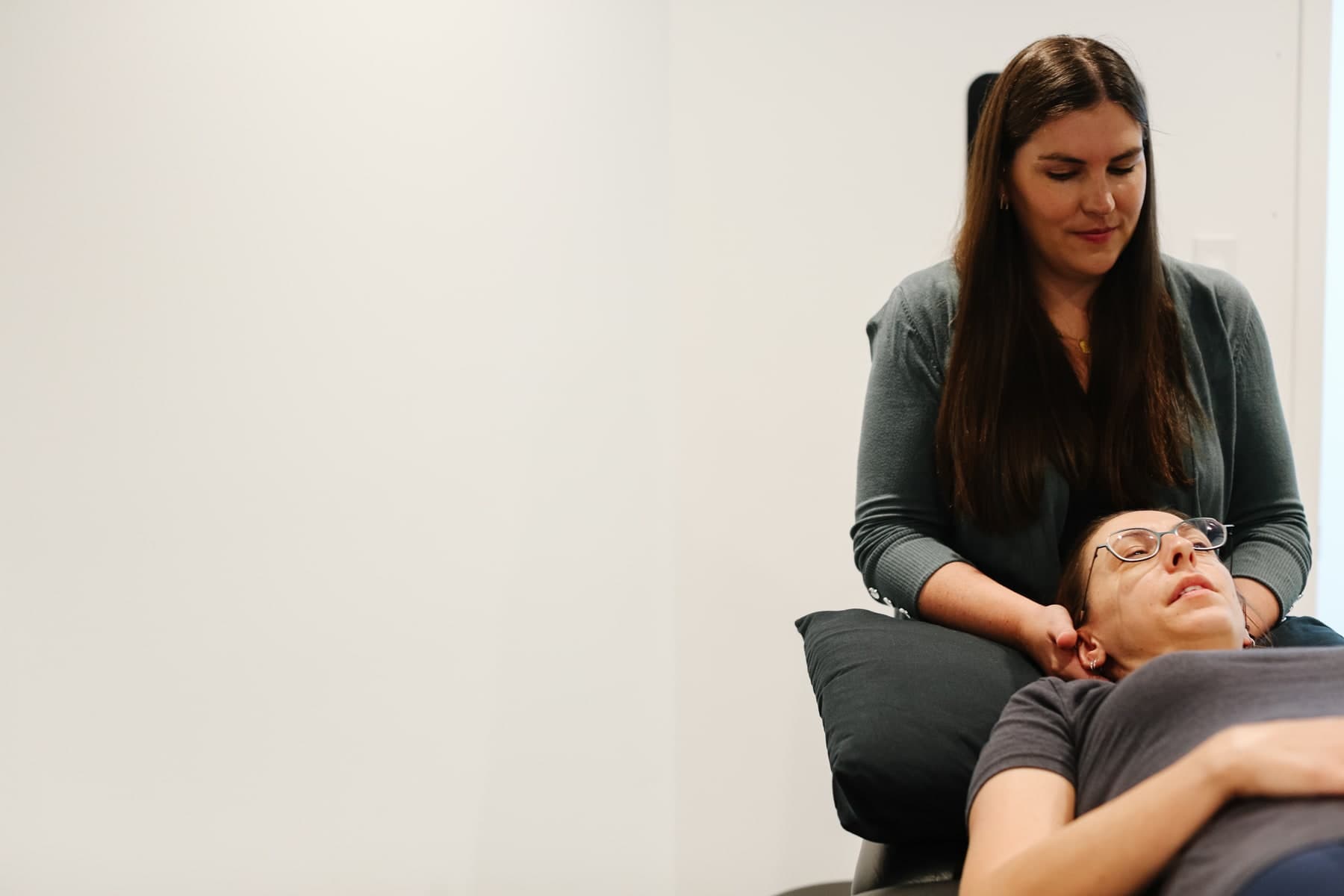
What Does Jaw Pain Feel Like?
Jaw pain can affect more of your day than you might expect. Chewing, talking, yawning, brushing your teeth and even sleeping can become uncomfortable. You might notice clicking or popping, a jaw that feels tight or tired, trouble opening your mouth fully, or headaches and ear pain that seem to come from nowhere.
Most jaw pain isn't serious. Most people get better with simple, conservative care, and your jaw is usually irritated, not damaged.
At Stride Physio & Performance in Swift Current, we help people across Southwest Saskatchewan understand their jaw pain and get back to eating, talking and sleeping comfortably.
Jaw Problems We Assess and Treat
- TMJ disorders (often called TMJ or TMD)
- Jaw muscle pain and tightness, often linked to clenching or grinding
- Clicking or popping in the jaw (disc displacement)
- A jaw that catches, gets stuck or won't open fully (locking)
- TMJ arthritis
- Headaches and facial pain related to the jaw or neck
- Jaw pain after dental work, an injury or whiplash
- Jaw pain that comes with neck pain or long stretches looking down at a phone
How We Assess Jaw Pain
Jaw pain can come from the joint itself, the muscles around it, your neck or other nearby structures, and the right plan depends on what's driving yours. Your first visit is about understanding your situation, not jumping straight into treatment.
A Conversation First
We'll ask when your symptoms started, what makes them better or worse, whether you clench or grind your teeth, how you're sleeping, how stress is affecting you, and whether you have headaches, ear symptoms or neck pain. Your answers often point us in the right direction before any testing.Checking How Your Jaw Moves
We measure how far and how smoothly your jaw opens, closes and moves side to side, and listen and feel for clicking or catching in the joint.The Muscles of Your Jaw, Head and Neck
We check these muscles for tenderness, since they often play a part in jaw pain and headaches.Looking at Your Neck
We assess how your neck and upper back move, because they often contribute to jaw pain and headaches.A Plan You Understand
We rule out anything that needs medical or dental attention and narrow things down to a few likely possibilities, so your plan targets the right problem. You'll leave knowing what's likely going on and what you can start doing right away.
When Should Jaw Pain Be Checked by a Doctor or Dentist?
Some jaw and facial symptoms need a doctor or dentist to look at them first. As part of every assessment, we screen for warning signs such as:
- a jaw that suddenly locks and won't open or close
- swelling in the face or jaw, especially with fever
- numbness or tingling in the face
- jaw pain when chewing that comes with a new headache, scalp tenderness or vision changes, especially in adults over 50
- tooth pain, gum problems or ear infection symptoms
- pain after a significant injury to the face or jaw
- unexplained weight loss or a history of cancer
If something doesn't fit the pattern of a typical jaw problem, we'll tell you and help you get to the right place, whether that's your dentist, family doctor or a specialist.
If you have jaw pain along with chest pain, shortness of breath or sweating, call 911. Heart problems can sometimes be felt in the jaw.
How We Treat Jaw Pain in Swift Current
Treatment is built around your assessment and your goals, and it's usually guided by these principles:
- Understanding your jaw: we'll explain what's likely going on in plain language. Knowing your jaw is irritated, not damaged, and that most jaw pain settles can ease a lot of worry.
- Simple self-care: practical strategies like resting your jaw during flare-ups, choosing softer foods for a while, avoiding gum and wide yawns, and using heat or ice.
- Jaw exercises: gentle exercises to improve movement, control and comfort when you open and close your mouth.
- Habit awareness: clenching during the day often happens without you noticing. We'll help you catch and change habits like clenching, resting your jaw on your hand or chewing on one side.
- Hands-on treatment when it helps: manual therapy and massage for the muscles of your jaw, head and neck can help ease pain and tension in the short term, alongside the exercises and self-care.
- Treating the neck: if your neck or upper back is contributing to jaw pain or headaches, we'll include it in your plan.
- Looking at the bigger picture: stress and poor sleep are closely linked to jaw clenching and pain. We'll talk about them where they matter.
Jaw pain is often best managed as a team. If you're already seeing a dentist about your jaw, or might benefit from something like a night guard, we're happy to work with them, with your consent, so everyone involved in your care is on the same page.
Massage Therapy for Jaw Pain
Common Questions About Jaw Pain
Is clicking in my jaw a problem?
Will my jaw pain go away?
Do I need a referral to see a physiotherapist for jaw pain?
Can stress make jaw pain worse?
Should I see my dentist or a physiotherapist first?
Book Jaw Pain Treatment in Swift Current
Start with an assessment that explains what's behind your jaw pain and what you can do about it. We see people from Swift Current and across Southwest Saskatchewan.