Hip Pain: Symptoms, Causes and Treatment
A deep groin ache, pain when you lie on your side, stiffness getting out of the car. Hip pain shows up in different ways, and the right plan depends on what's driving yours.
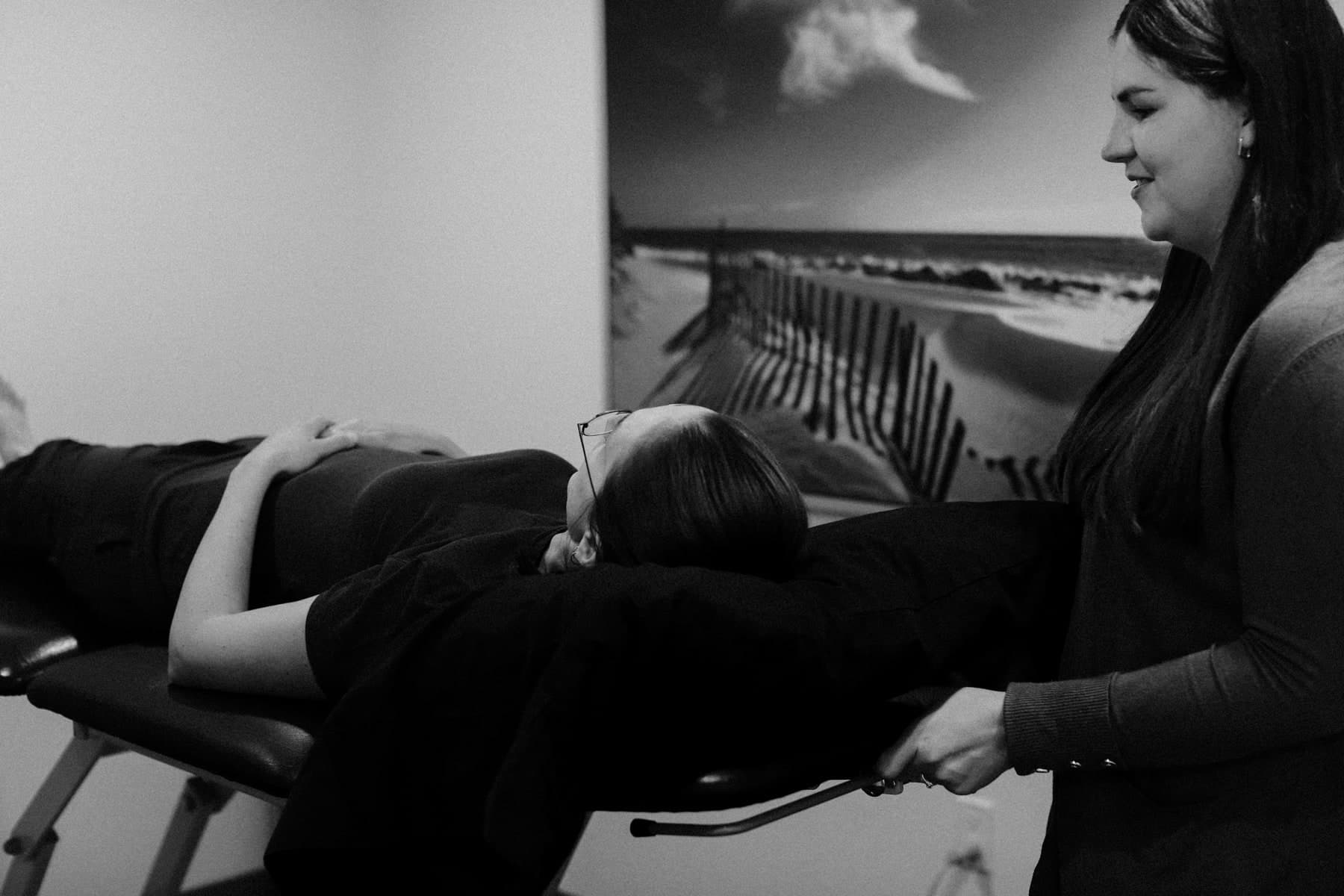
What Is Hip Pain and Where Does It Come From?
Your hip is a ball-and-socket joint. The top of the thigh bone sits in a cup on the pelvis, and a ring of cartilage called the labrum lines the rim of that cup. Around the joint sit large, strong muscles and tendons: the glutes on the outside, the hip flexors at the front, the adductors in the groin and the hamstrings, which attach at your sit bone.
Pain can come from any of those structures. It can also come from the pelvis or your lower back, both of which commonly refer pain into the hip. That's why a note that says "hip pain" doesn't tell the whole story.
You may have been handed one of these terms. Osteoarthritis means wear-related change in the joint surfaces. Greater trochanteric pain syndrome is pain on the outside of the hip, often called bursitis, though irritated gluteal tendons are usually a bigger part of it. Femoroacetabular impingement (FAI) describes a shape of the ball or socket that can pinch at the end of a movement. A labral tear is a split or fraying in that ring of cartilage.
It's easy to read "arthritis" and assume your hip is wearing out for good. Hip pain, including arthritis, often responds well to the right exercise and guidance.
Hip Problems We Assess and Treat
Hip Arthritis (osteoarthritis)
Pain on the Outside of the Hip (gluteal Tendinopathy and Bursitis)
Hip Impingement (FAI) and Labral Tears
Groin Pain and Adductor Strains
Hip Flexor Strains and Tendon Pain
Sit Bone Pain (hamstring Tendinopathy)
Snapping or Clicking Hip
Hip and Pelvic Pain During or After Pregnancy
Rehab Before and After Hip Replacement
Rehab After Hip Arthroscopy
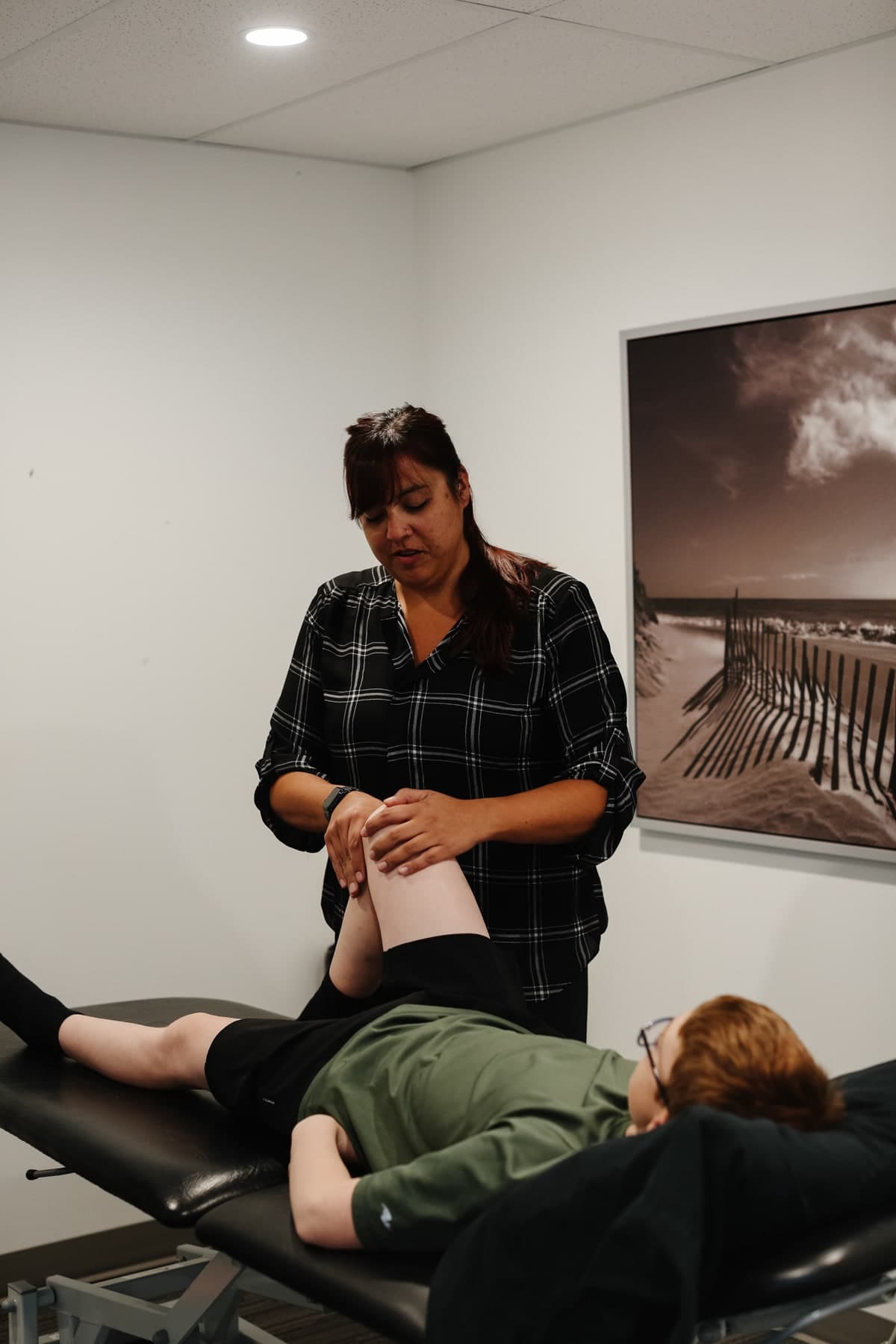
What Does Hip Pain Feel Like?
Where you feel it narrows things down a lot.
A deep ache in the groin that's worse getting out of the car, putting on socks or tying your shoes often points to the joint itself. Arthritis tends to feel stiff first thing in the morning and after sitting, then loosens as you move.
Pain on the outside of the hip is a different pattern. It's usually sore when you lie on that side at night, climb stairs or stand on one leg, and it often traces back to the gluteal tendons.
A sharp pinch at the front of the hip when you squat deep, skate or sprint, sometimes with a click or catch, fits with impingement or the labrum. Groin pain that bites when you push off or change direction on the ice suggests the adductors. An ache at the sit bone on hard chairs, long drives or uphill running usually involves the hamstring tendon.
Pain that wanders into the buttock or the back of the thigh, especially alongside a stiff back, may be coming from your spine. In that case your assessment also looks at low back pain as part of the picture.
How Serious Is My Hip Pain, and Do I Need a Scan?
Mild hip pain comes and goes, eases as you warm up and doesn't stop you working or sleeping. Moderate pain limits how far you can walk, makes stairs hard or stops you lying on one side. Severe pain is constant, makes you limp, keeps you up at night or keeps getting worse. Severity is about what your hip lets you do, and it doesn't always match a scan. With arthritis, the X-ray and the pain often tell different stories.
You often don't need imaging right away. Hip arthritis can usually be diagnosed from your symptoms and a physical exam. Labral tears and impingement shapes show up on scans in plenty of people with no hip pain at all, athletes in particular, so a tear on an MRI report may not explain your symptoms. Imaging helps in specific situations: after a fall, when a stress fracture is suspected, when symptoms aren't improving or when surgery is on the table. We'll recommend it, or talk with your doctor about it, when it's needed.
Some hip problems need medical care first. Every assessment screens for warning signs: being unable to put weight on your leg after a fall, deep groin pain that keeps getting worse with running or training (which can signal a stress fracture), a child or teen with hip, thigh or knee pain and a limp, a hot, painful hip with fever or feeling unwell, constant pain that doesn't change with movement or rest, severe night pain, and unexplained weight loss or a history of cancer. If something doesn't fit a typical hip problem, we'll tell you and help you get to your family doctor, an orthopaedic surgeon or emergency care.
If an older adult can't stand or walk after a fall, call 911 or go to the emergency department.
How We Assess Hip Pain
Your first visit is focused on understanding what's driving your hip pain, not jumping straight into treatment. Wear comfortable clothing that lets us see and move your hip.
A conversation about your hip
We ask where exactly you feel it, how it started, which movements and positions bring it on, whether it affects your sleep and what you want to get back to. Location alone often narrows things down considerably.Movement and strength testing
We check how your hip moves, which positions reproduce your pain and how strong the muscles are around your hip and pelvis.Specific tests and how you move
Depending on your symptoms, we use tests for the joint, tendons and groin, and watch you walk, squat, step and balance on one leg.A screen of your back and pelvis
Both commonly refer pain to the hip, so we check them before settling on a cause.An explanation and a plan you agree on
We rule out anything that needs medical attention, narrow your pain down to a few likely causes and explain them in words that make sense. You leave with a few things to start at home and a rough idea of how long recovery may take.
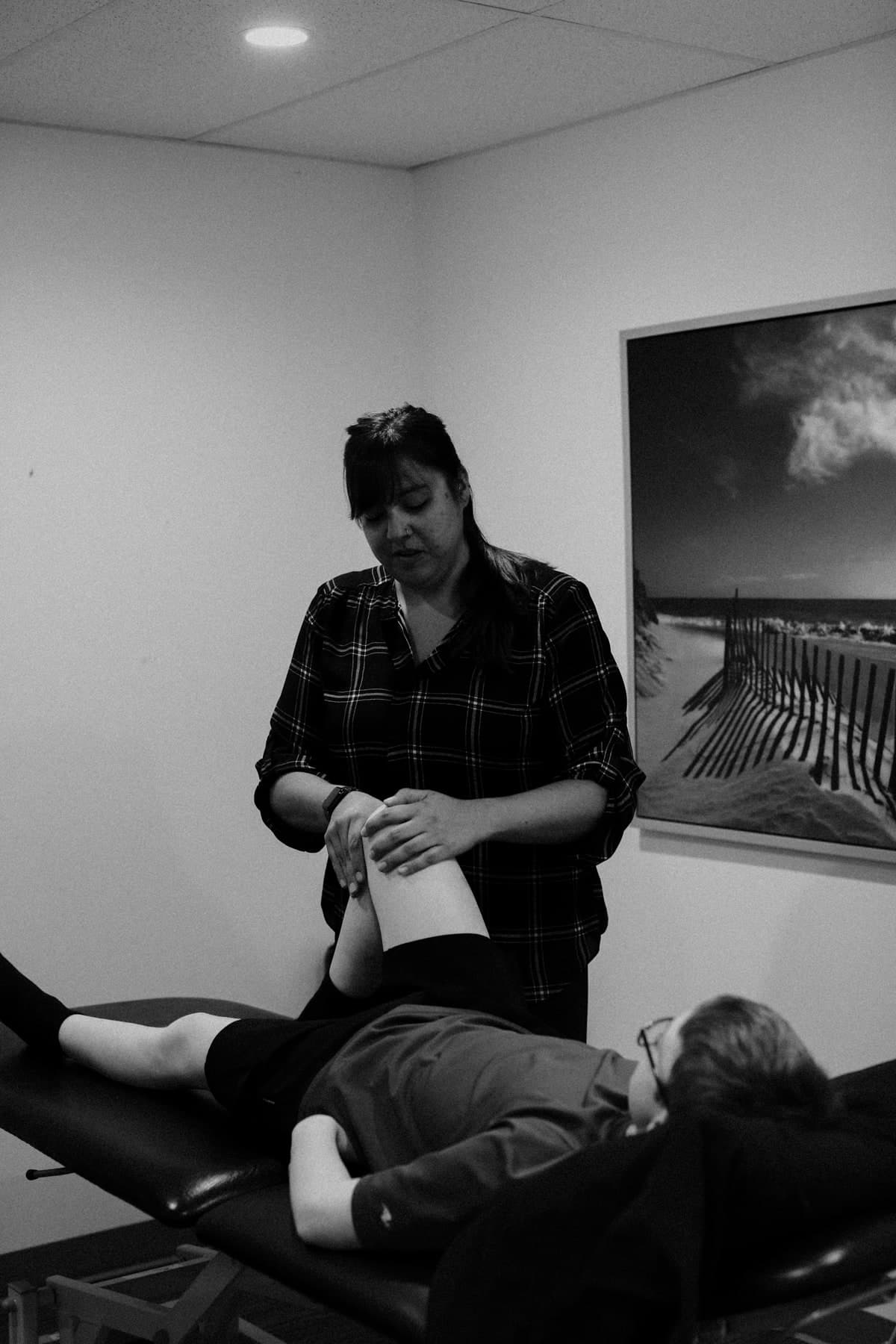
How We Treat Hip Pain in Swift Current
Treatment is built around your assessment findings and your goals, not a standard protocol for a diagnosis. Three principles guide it:
- Progressive strengthening: building strength in your hip, glute, thigh and core muscles has strong research support for most hip conditions, arthritis included.
- Managing your load: we help you adjust running, skating, stairs, sitting and sleeping positions so your hip can settle, without stopping everything.
- Hands-on care and other tools when they help: manual therapy, massage, dry needling, acupuncture or shockwave therapy may ease pain in the short term. They support the plan rather than replace it.
Early on, the aim is calming things down. That might mean changing how you sleep, trimming the activity that flares you up and starting a few targeted exercises. For pain on the outside of the hip, education and a steady exercise program tend to give better long-term results than injections alone.
Later, the work gets heavier and more specific to you. Walking without pain, sleeping through the night, a full shift on your feet or getting back on the ice each gets a step-by-step plan with clear milestones. Between visits, you do a short home program, and we adjust it as your hip responds.
Groin pain is one of the most common injuries in hockey. It usually responds to a structured strengthening program, particularly for the adductors, and a gradual return to skating. Stronger adductors also appear to lower the chance of groin injuries coming back.
If you're heading for a hip replacement or arthroscopy, we help you prepare beforehand and recover afterward. Our clinic in Swift Current has physiotherapists and a registered massage therapist under one roof, and once you're feeling better, our coaching program can help you keep building strength so your hips hold up to the things you love.
How Long Does Hip Pain Take to Get Better?
It depends on what's driving your pain, how long you've had it, how easily it flares and what you're asking your hip to do. How consistently you do your home program matters too.
A recent strain, or a flare that's caught early, may settle over a few weeks. Tendon pain on the outside of the hip or at the sit bone usually takes longer, often months of steady loading, because tendons adapt gradually. Hip arthritis is managed over time rather than fixed in a set number of visits. Pain and function can improve with strengthening and activity changes, and flare-ups get easier to handle as you learn what settles them. Getting back to skating after a groin strain goes in stages, with each step earned before the next. After surgery, timelines follow your surgeon's protocol.
We'll give you a rough estimate at your first visit and revisit it as you go. Sometimes that means fewer visits than you expected. If your hip isn't progressing the way it should, we'll change the plan or help you get further investigation.
Common Questions About Hip Pain
Do I need a doctor's referral to see a physiotherapist for hip pain?
Should I wait and see before booking?
Can I keep skating, running or working with hip pain?
Will I need a brace, orthotics or an injection?
What happens if my hip pain doesn't settle?
Book Hip Pain Treatment in Swift Current
Leave your first visit knowing what's likely behind your hip pain and with a few simple things to start right away. We see people from Swift Current and across Southwest Saskatchewan.