Shockwave Therapy in Swift Current
For tendon and soft tissue pain that hasn't improved as much as you'd hoped with exercise, used as one part of a plan you follow between visits.
- 10 to 15 min
- Typical length of a shockwave session
- 3 to 5
- Sessions in a usual plan, about a week apart
- No referral
- Needed to see a physiotherapist in Saskatchewan
What Is Shockwave Therapy and Who Is It For
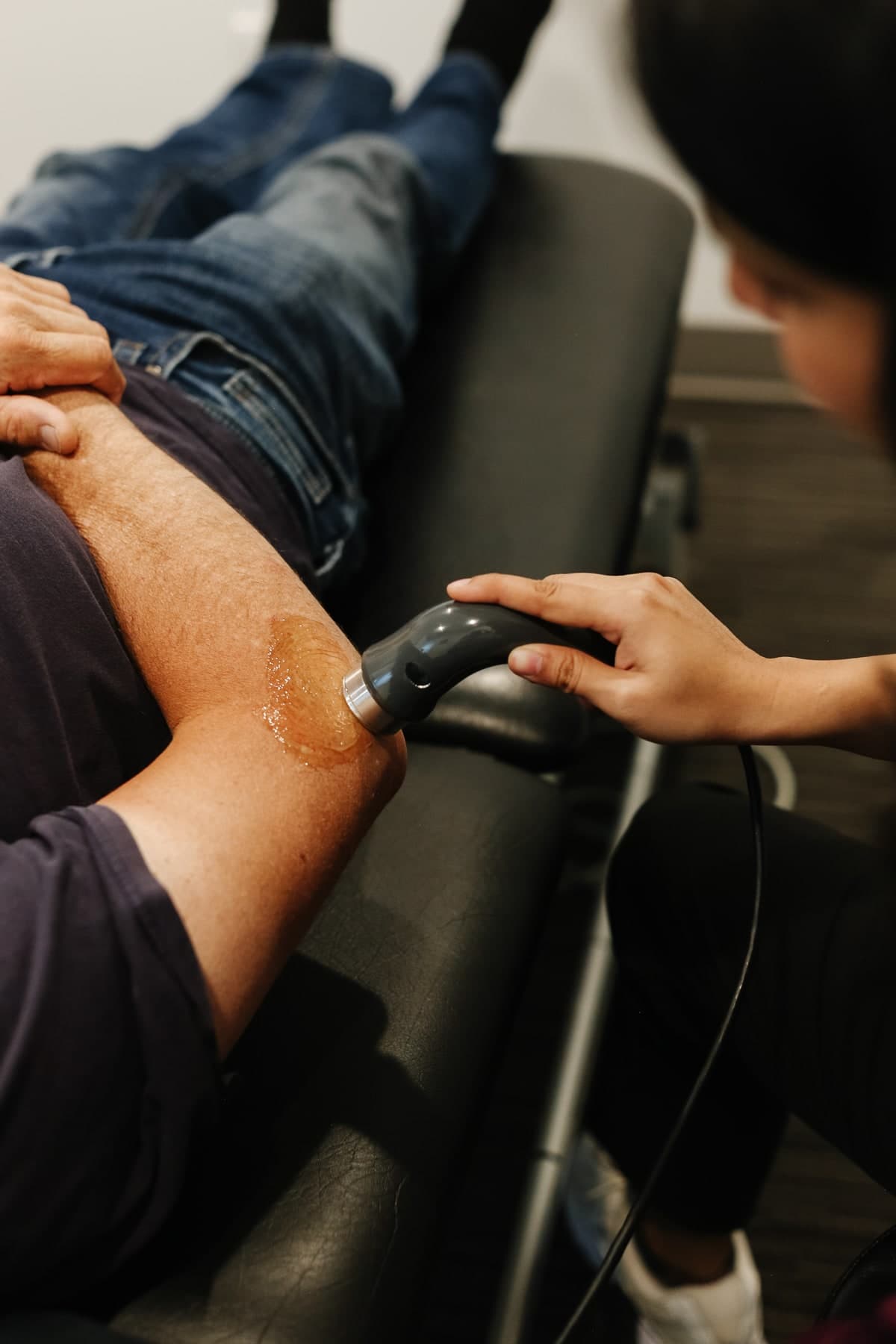
Shockwave therapy sends strong sound waves through the skin from a handheld applicator into a sore tendon or soft tissue. At Stride, we use it mainly when a problem hasn't improved as much as expected with exercise and other care, and always as one part of a broader plan.
It suits you if you've been doing your rehab and the pain is still hanging on. That might be heel pain that's worst with your first steps in the morning, an Achilles that complains on runs, a shoulder with calcific tendinopathy, or an ache on the outside of the hip when you lie on that side. If you haven't had an assessment and an exercise program yet, that usually comes first, through physiotherapy.
Conditions Shockwave Therapy May Help
Plantar Fasciitis (heel Pain)
Achilles Tendon Pain
When Shockwave Is a Reasonable Option, and When It Isn't
The research behind shockwave is clearest for the four conditions above. For others, like tennis elbow or patellar tendon pain, the results are more mixed. Some people improve noticeably and others don't. Before you commit to anything, we'll tell you whether shockwave is a reasonable option for your situation, and if it isn't, what we'd suggest instead.
Shockwave isn't suitable for everyone. Before starting, we screen for pregnancy, blood clotting problems, certain medications and other health conditions. If something on that list applies to you, we'll talk through other options, or point you to your doctor if it needs checking first.
What a Shockwave Session Involves
Shockwave starts with an assessment, so your first visit looks a little different from the ones that follow.
Assessment and Screening
We ask about your symptoms, what you've tried so far and your health history, then examine the area. We screen for anything that rules shockwave out and agree on a plan together before any treatment. Wear clothing that lets us see and reach the sore spot.The Treatment Itself
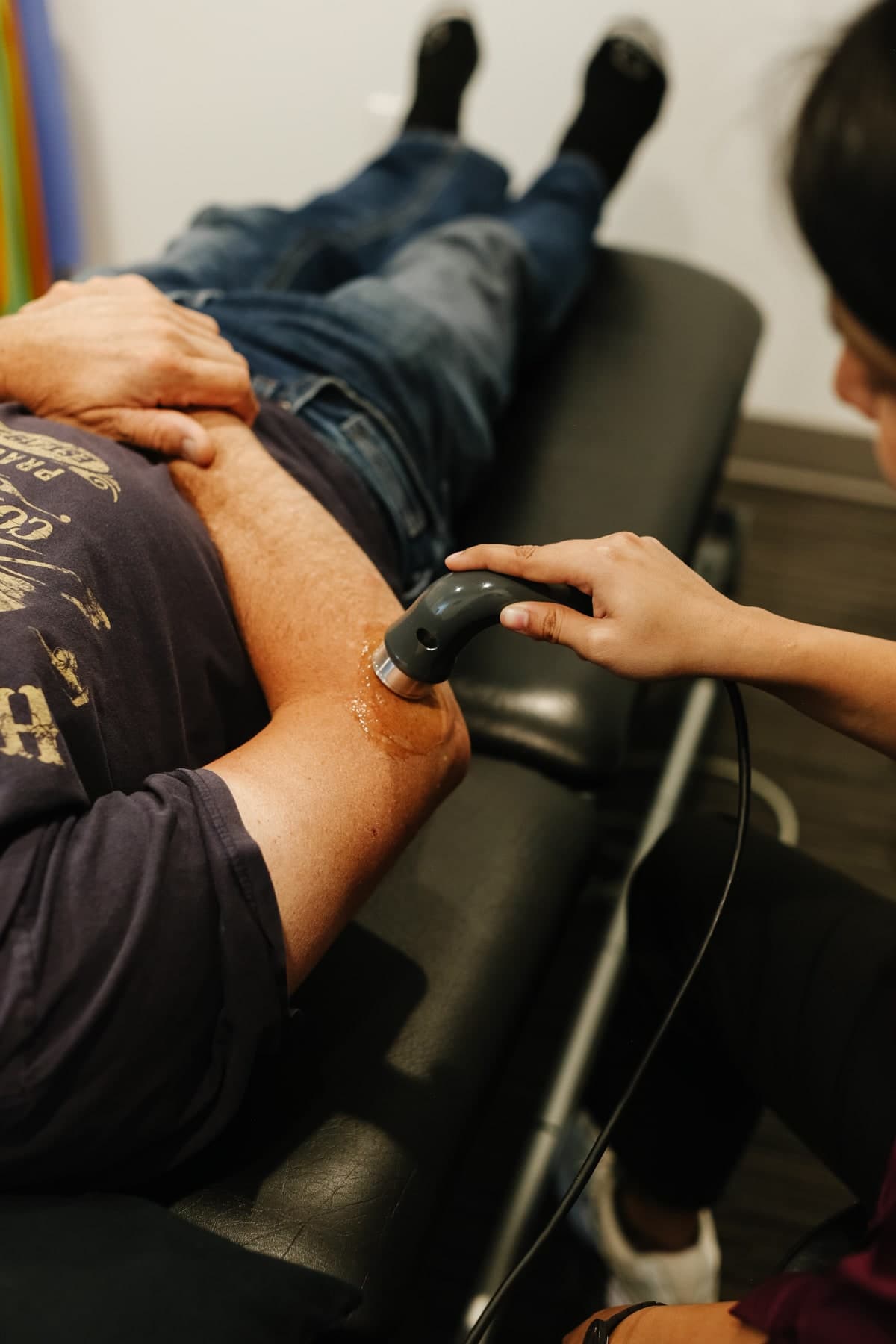
A session usually takes about 10 to 15 minutes. You'll feel a strong tapping over the sore area that can be uncomfortable, and we adjust the intensity so it stays manageable.Afterwards
Some soreness or redness is common and usually settles within a day or two. Before you leave, we'll go over the exercises you're doing at home.The Full Course
A usual plan is about three to five sessions, spaced roughly a week apart, with your exercise program running alongside the whole time.
Our Approach to Shockwave Therapy in Swift Current
Tendons get stronger and more resilient with the right kind of loading over time. Shockwave can help settle pain and get things moving in the right direction, but the lasting change usually comes from a progressive exercise program. That's why every course of shockwave at Stride comes with a plan you follow on your own.
- We check first whether shockwave suits your problem, and tell you if it doesn't.
- Your exercises progress as your tendon tolerates more, so you're building capacity rather than chasing short-term relief.
- We review how your pain behaves between sessions and adjust the plan, or stop, based on what we see.
If you want to keep building strength once the pain has settled, our coaching program picks up where rehab leaves off.
Is Shockwave Therapy Covered, and Who Delivers It
Shockwave is part of the care our physiotherapists provide. You don't need a doctor's referral to see a physiotherapist in Saskatchewan, though some insurance plans require one before they'll cover treatment. Coverage for shockwave varies between extended health plans, so check your plan's physiotherapy benefits before you start. We'll go over the cost of a session before your first one.
If your tendon problem came from a workplace injury or a car accident, bring your WCB or SGI claim number to your first visit. We communicate with WCB and SGI directly and will talk through what your claim covers before treatment starts.
Why Come to Stride for Shockwave
Stride is a physiotherapy clinic in Swift Current, and having shockwave here means you don't need to drive to Regina or Saskatoon for it. It sits alongside physiotherapy, dry needling, acupuncture and massage therapy under one roof.
If you see more than one of our clinicians, we talk to each other about your care, so the shockwave, your exercises and anything else you're doing fit together. We also work with family doctors and specialists when it helps, and we'll tell you if physiotherapy isn't the right fit or if something needs checking first.
We see people from Swift Current and the surrounding communities, including athletes, farmers, tradespeople and office workers.
Shockwave Therapy Questions, Answered
Do I need an X-ray or MRI before starting shockwave?
Can I keep working or training during a course of shockwave?
What happens if shockwave doesn't help?
How long should I try exercise before asking about shockwave?
Book a Shockwave Assessment
Start with an assessment at our Swift Current clinic and we'll tell you whether shockwave is a reasonable option for your tendon pain.