We now offer shockwave therapy at Stride Physio & Performance in Swift Current.
If you've been dealing with heel pain or a stubborn tendon problem for months, you may have already heard about it. Maybe a friend tried it. Maybe you saw it online, described as the thing that finally worked.
Here's the honest version. Shockwave can be a useful option for a handful of long-standing tendon and soft tissue problems. For some of those, the research is fairly encouraging. For others, it's mixed or thin. And for almost everyone, it works best alongside a good exercise plan rather than instead of one.
This post walks through what it is, where the evidence is strongest, and how to tell whether it's worth considering for you.
What Is Shockwave Therapy?
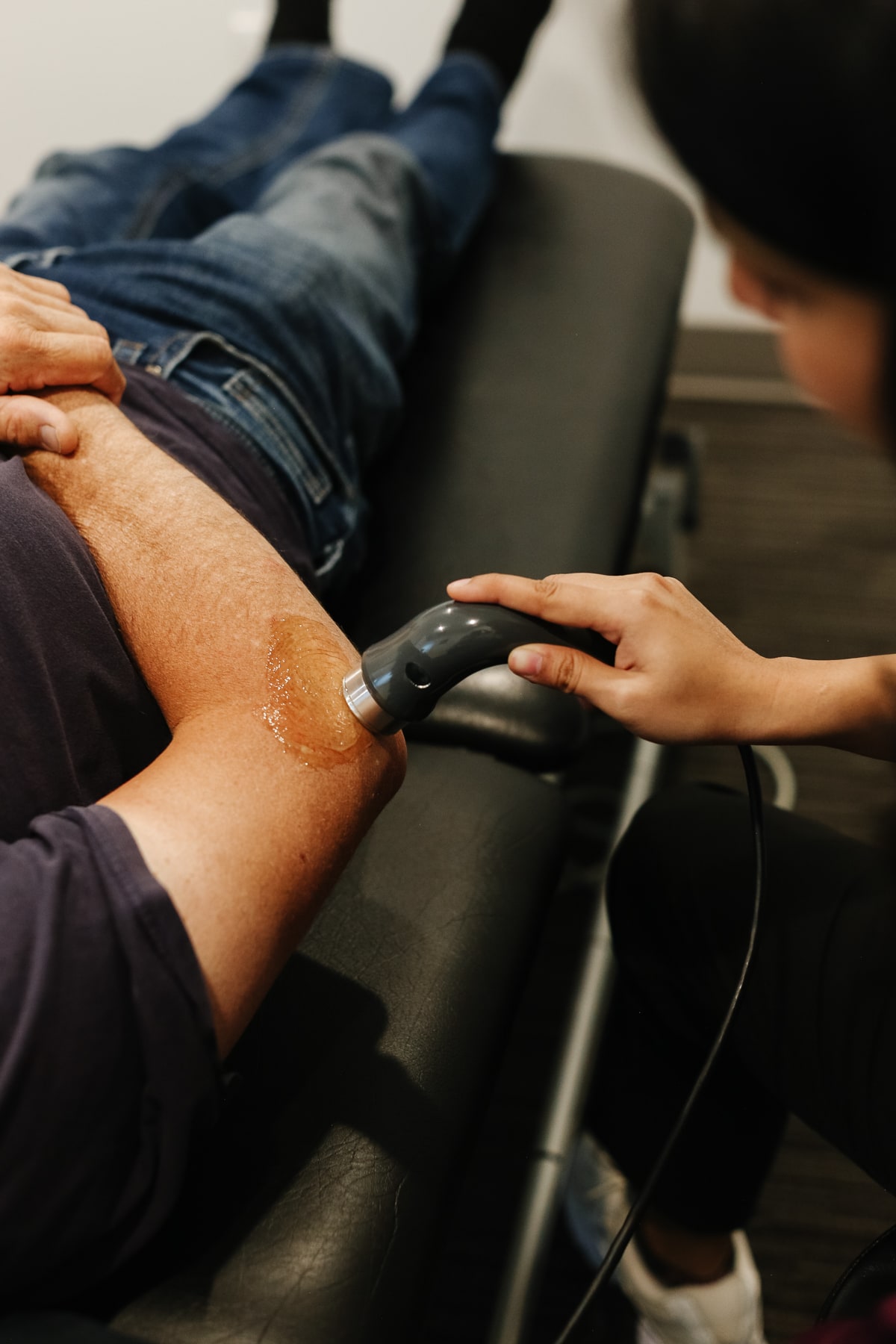
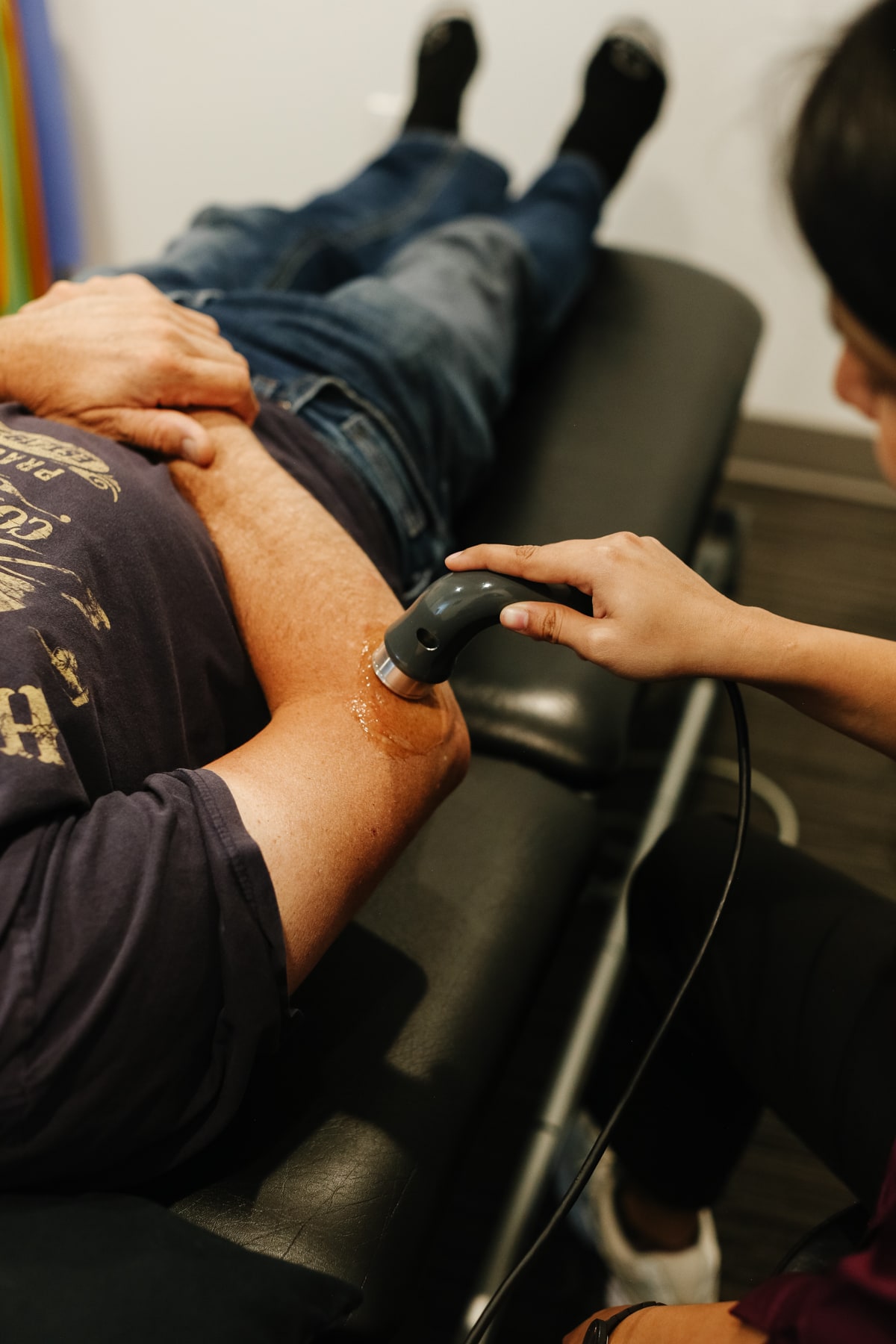
Shockwave therapy (sometimes called ESWT, short for extracorporeal shockwave therapy) uses a handheld applicator to send strong pulses of acoustic energy through the skin into the tissue underneath.
The technology came out of medicine's use of shockwaves to break up kidney stones. It's since been adapted for muscles, tendons and bone.
You'll hear about two types:
- Focused shockwave concentrates energy at a point deeper in the tissue.
- Radial shockwave delivers energy that's strongest at the skin and spreads out as it goes deeper. It's the type most physio clinics use, and it suits tissue closer to the surface.
They're different tools, and research on one doesn't automatically apply to the other. That's one of the reasons the evidence can look confusing.
How Might It Work?
The short answer: we have some good ideas, but we don't fully know.
The general theory is that mechanical energy prompts cells to respond. Lab and animal studies suggest shockwave may increase local blood flow, nudge tendon cells to lay down new collagen, and calm some of the chemical signals involved in pain.
It also seems to change how pain nerves fire for a while. That may explain why some people notice less pain within a few sessions.
The catch is that most of this comes from animal and lab research. In people, we haven't confirmed that those changes are what makes someone feel better. Some of the early relief is likely a change in pain sensitivity, not tissue "healing." That's not a bad thing. Less pain can make it easier to move and load the area, which matters a lot.
One exception: in calcific shoulder tendinopathy, calcium deposits can sometimes be seen shrinking on imaging after treatment. That's one of the few effects we can measure.
Where Does the Evidence Look Strongest?
Shockwave is promoted for a long list of problems. The research only supports a few of them with any real confidence.
| Condition | What the research suggests |
|---|---|
| Chronic plantar fasciitis (heel pain lasting 6+ months) | The most consistent evidence. Trials regularly show less pain than sham treatment. Compared with other active treatments, the difference is smaller and less clear. |
| Calcific rotator cuff tendinopathy (calcium deposits in the shoulder) | Fairly good evidence for less pain and better function, and deposits can shrink. Focused, higher-energy protocols tend to do best. |
| Greater trochanteric pain syndrome (outer hip pain) | Encouraging, but fewer studies and most weren't blinded. |
| Achilles tendon pain (mid-portion) | Mixed. Some reviews are positive. Others found little benefit over a good exercise program. |
| Knee osteoarthritis | Limited. Some short-term improvement, which doesn't seem to last a year. |
| Tennis elbow, patellar tendon pain, non-calcific shoulder pain | Inconsistent or weak. Good trials disagree, or the benefit over placebo is small. |
| Low back pain, muscle pain, nerve conditions | Early research only. Not established. |
A few honest caveats apply across the board. Shockwave is hard to fake in a study, because it's noisy and you can feel it. Many trials are small, and settings vary a lot between studies. And many of these conditions slowly get better on their own over 6 to 12 months, which makes any treatment look good if there's no comparison group.
So when we suggest shockwave, it's usually for the top two or three rows of that table.
Why Is It an Add-On, Not a Replacement?
Tendons get stronger and less sensitive when you load them gradually. That's still the foundation for most tendon problems, and it has the strongest evidence behind it.
Shockwave fits in as a helper. If pain has been stuck for months despite doing the work, it may take enough of the edge off that exercise becomes easier to progress. That's how we use it at Stride.
What we won't do is offer shockwave as a stand-alone fix and skip the rest. If someone hasn't yet had a fair trial of a structured loading program, that's usually where we'd start.
Who Might Be a Good Fit?
Shockwave may be worth a conversation if:
- your symptoms have been around for roughly 3 to 6 months or longer
- you have a clear diagnosis, ideally one of the conditions above
- you've given a proper exercise or physio program a genuine try
- you'd like a non-invasive option before considering injections or surgery
It's usually not appropriate if you're pregnant, have a bleeding disorder or take blood thinners, have an infection or cancer in the area, or are a child or teen with growth plates that are still open. We also avoid treating over the lungs, major nerves or blood vessels, and we generally wait about six weeks after a steroid injection.
If you're preparing for a big return to high-intensity sport, timing matters too. We'll talk through that with you.
Side effects are usually mild and short-lived: discomfort during treatment, redness, some bruising or swelling. Serious problems like tendon or nerve injury are rare, but they've been reported, which is one reason we screen carefully first.
What Can I Expect at a Session?
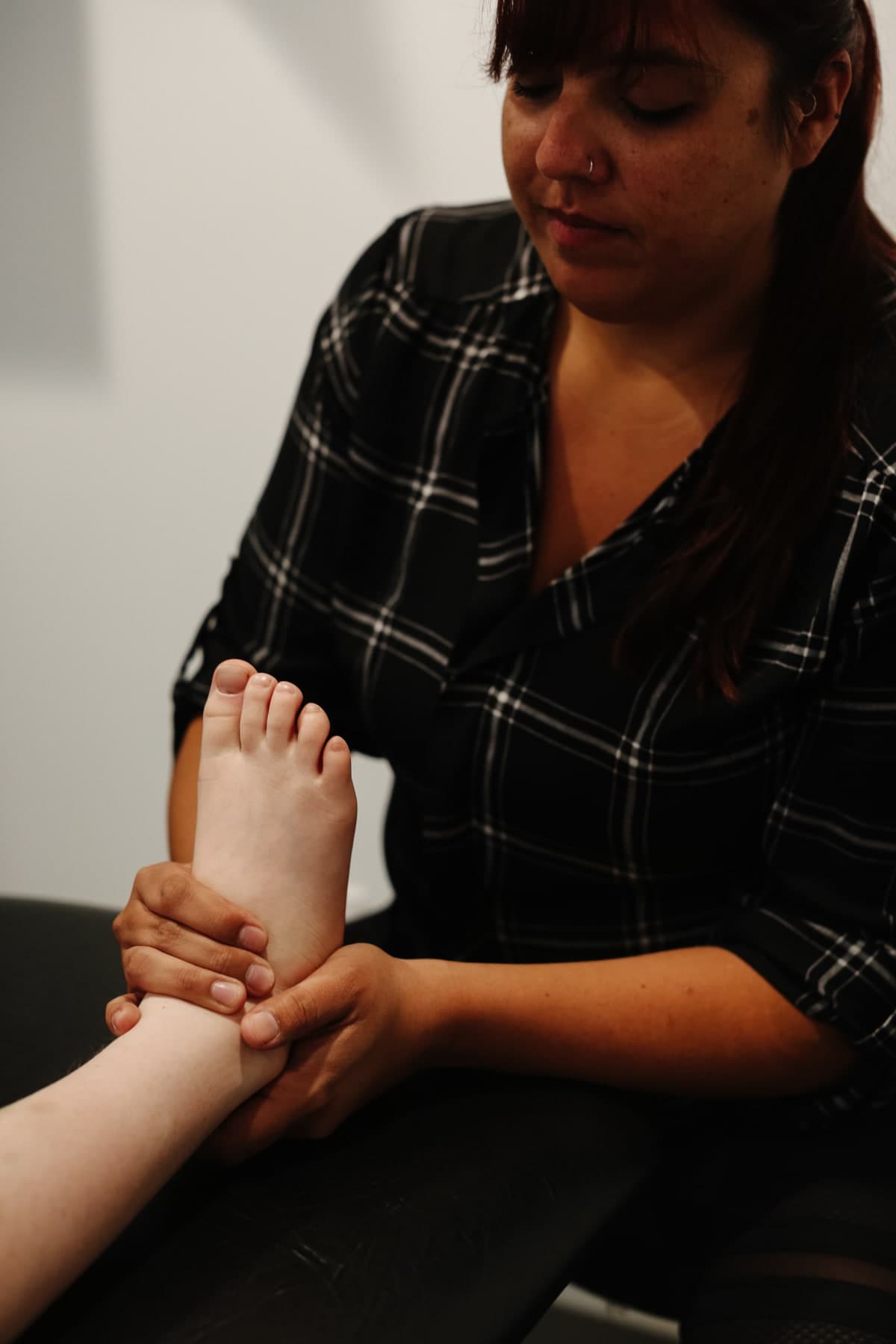
First, we assess. We want to be confident about what's going on and whether shockwave makes sense, before we pull the device out.
If it's a fit, treatment typically looks like this:
- A short session, usually just a few minutes of actual shockwave time within your appointment.
- Usually 3 to 5 sessions, about a week apart.
- Your exercise program continues alongside it.
It's not a comfortable treatment. Most people describe a strong tapping or thudding that can be sore over the sensitive spot. We start lower and adjust as we go, and you can always ask us to ease off.
The area may feel tender for a day or two afterward. That's normal, and you can usually go about your day.
Improvement, when it comes, tends to build gradually over 6 to 12 weeks rather than overnight. Some people notice a big change. Some notice a modest one. Some don't notice much at all. We'll be straight with you about how it's going and whether it's worth continuing.
Frequently Asked Questions
Does shockwave therapy hurt?
It's usually uncomfortable during treatment, especially over the sore spot. We adjust the intensity as we go. Mild tenderness for a day or two afterward is common.
How many sessions will I need?
Most protocols use 3 to 5 sessions, about a week apart. We'll reassess along the way rather than commit you to a fixed package.
Does shockwave work for plantar fasciitis?
Chronic plantar fasciitis has the most consistent research support. Studies generally show less pain compared with sham treatment, though the advantage over other active treatments is smaller. It tends to work best combined with exercise.
Can shockwave replace exercise or physio?
No. For tendon problems, gradual loading is still the main treatment. Shockwave can be a useful add-on when progress has stalled.
Do I need a referral?
No. You can book an assessment directly with a physiotherapist in Swift Current. Some insurance plans ask for a referral, so it's worth checking yours.
Is shockwave safe?
For most adults, yes, with mostly mild and temporary side effects. It isn't used in pregnancy, over open growth plates, or in some people with bleeding disorders, infections or cancer in the area. We screen for these at your assessment.
The Bottom Line
Shockwave isn't a miracle treatment, and we won't pretend it is. For the right person with the right problem, it's a reasonable option that may help when things have been stuck for a while.
If you're wondering whether it applies to your heel, shoulder, hip or something else, we're happy to take a look and give you an honest answer. Sometimes that answer will be shockwave. Sometimes it'll be a better exercise plan. Either way, you'll leave knowing more about what's going on.
You can book an assessment online or call us at 306-778-7770. We're at 220 1st Ave NW in Swift Current, and we see people from across southwest Saskatchewan.
Sources
- Charles R, et al. The effectiveness of shockwave therapy on patellar tendinopathy, Achilles tendinopathy, and plantar fasciitis: a systematic review and meta-analysis. Frontiers in Immunology, 2023.
- Melese H, et al. ESWT on pain and foot function in chronic plantar fasciitis: systematic review of RCTs. Disability and Rehabilitation, 2022.
- Al-Abbad H, et al. Effects of shockwave therapy on musculoskeletal conditions based on imaging changes: systematic review and meta-analysis. BMC Musculoskeletal Disorders, 2020.
- American Academy of Orthopaedic Surgeons. Management of Osteoarthritis of the Knee (Non-Arthroplasty) clinical practice guideline, 2021.
- Gao T, Zhao B. ESWT for pain management in musculoskeletal rehabilitation: narrative review. Journal of International Medical Research, 2026.
Have a Question About Your Care?
Our team is happy to help. Reach out and we’ll get back to you.
Get in touch